
Muscle Car vs Sports Car: The Must-Know Differences That Set Them Apart
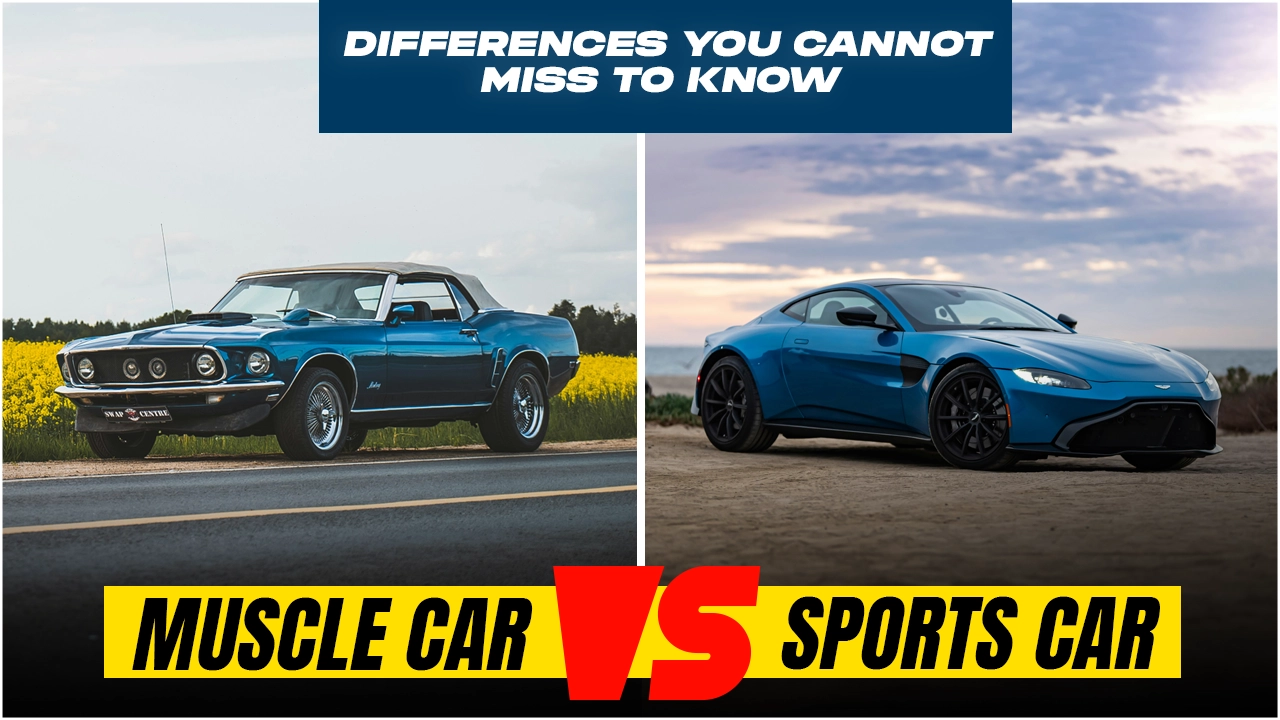
When it comes to powerful and thrilling rides the muscle car vs sports car debate is one that car enthusiasts and casual drivers alike love to explore. Both offer impressive performance and eye-catching designs but understanding the must know differences between these two types of vehicles is key to making the right choice for your driving style and needs.
In this guide we’ll break down everything you need to know about muscle cars and sports cars from their engines and handling to their culture and everyday usability.
What is a Muscle Car?

A muscle car is a type of American-made vehicle that features a powerful V8 engine, a rear-wheel-drive layout, and a focus on straight-line speed. These cars gained popularity in the 1960s and 1970s and continue to be symbols of raw power and aggressive styling.
What is a Sports Car?

A sports car on the other hand is built for agility, handling, and performance especially around corners. These cars are often lightweight and feature a more aerodynamic design compared to muscle cars. They are designed to deliver an engaging and precise driving experience whether on city streets or race tracks.
Muscle vs Sports Car: What Is Their History Difference?
History of Muscle Car
Muscle cars started in the US in the late 1940s and exploded in popularity during the 1960s and 70s. They featured big V8 engines on mid-sized, affordable bodies. The muscle car era slowed down in the 1970s due to fuel crises and tougher regulations but made a strong comeback in recent years.
History of Sports Car
Sports cars have a longer history that began in early 1900s Europe. They focus on lightweight design and sharp handling rather than just power.Over time, sports cars evolved with better technology and aerodynamics. Today, they range from affordable models like the Mazda MX-5 to exotic supercars.
Muscle Cars vs Sports Cars: Differentiating Their Models
| Category Popular Models | Muscle Cars | Sports Cars |
|---|---|---|
| Popular Models | Ford Mustang GT | Mazda MX-5 Miata |
| Chevrolet Camaro SS | Porsche 718 Cayman | |
| Dodge Challenger R/T | Chevrolet Corvette Stingray | |
| Engine Type | Large V8 engines | Smaller turbocharged or high-revving engines (I4, V6, V8) |
| Horsepower Range | 375–480 hp | 180–495 hp (more balanced across range) |
| 0–60 mph (avg) | 4.0–5.0 sec | 3.0–5.7 sec |
| Focus | Straight-line speed, raw power | Handling, balance, cornering agility |
| Weight | Heavier (3,700–4,200 lbs) | Lighter (2,400–3,600 lbs) |
| Drive Type | Rear-wheel drive (RWD) | Mostly RWD, some AWD |
| Handling | Moderate to low | High to very high |
| Price Range | $40,000–$55,000 | $30,000–$70,000+ |
Muscle Car vs Sports Car: The Key Features That Set Them Apart
1. Driving Experience
Muscle Car
Driving a muscle car is all about raw power and torque. You feel the engine rumble through the steering wheel and floorboard. Acceleration is thrilling, especially in a straight line, but handling tight corners can feel sluggish due to the car’s weight.Sports Car
A sports car offers a refined, balanced driving experience. The car feels planted on winding roads, with responsive steering and precise handling. Luxury sports cars take this experience to the next level with advanced technology, premium materials, and superior performance capabilities.2. Purpose & Design Philosophy
Muscle Car
Originally designed for affordable straight-line performance, muscle cars focus on power and boldness. They’re often larger, louder, and built to make a statement.Sports Car
Engineered for performance through precision, sports cars aim to offer the best handling, acceleration, and braking in a lightweight package. Style is sleek and aerodynamic, often inspired by motorsports.3. Engineering & Technology
Muscle Car
- Simpler, more traditional construction
- Often uses pushrod engines
- Less emphasis on weight reduction or advanced suspension systems
- Some models are catching up with tech, but many stick to old-school mechanics
Sports Car
- Uses advanced independent suspension, turbocharged engines, and aerodynamics
- Lightweight materials like carbon fiber or aluminum
- Features modern tech like launch control, adaptive dampers, and active aerodynamics
4. Sound & Feel
Muscle Car
The exhaust note is deep, throaty, and aggressive. Muscle cars have a “brutal” charm that appeals to traditional gearheads.Sports Car
Typically higher-revving, with a sharper, more refined exhaust note. Sound is engineered for excitement without overpowering the senses.5. Efficiency & Daily Use
Muscle Car
- Lower fuel efficiency
- Often bulkier, harder to park
- Not ideal for stop-and-go city driving
- Larger cabins, more usable space
Sports Car
- Better fuel economy, especially with smaller engines or hybrids
- Easier to maneuver in urban areas
- Often has limited storage and cabin space
- Some are not very practical for daily use
Cost Comparison
Muscle Car:
Muscle cars generally offer a more affordable entry point for high horsepower vehicles. They tend to have lower upfront costs but can be more expensive to maintain due to fuel consumption and wear from heavy engines.
Sports Car:
Sports cars often come with a higher purchase price, especially models with advanced technology and lightweight materials. However, some smaller sports cars are quite affordable. Maintenance costs vary widely based on brand and complexity.
Muscle Car vs Sports Car: Which One Should You Choose?
Ultimately, the decision between a muscle car and a sports car comes down to what excites you behind the wheel. If you crave raw power, bold design, and straight-line speed, a muscle car might be your ideal ride. But if you value precise handling, sleek style, and a balanced performance for all kinds of roads, a sports car is hard to beat.
Conclusion
Understanding the difference between muscle and sports car models is essential for choosing the right performance vehicle. Muscle cars offer raw power and bold styling perfect for straight-line speed, while sports cars deliver precision handling and sleek aerodynamics for an agile driving experience.
FAQs
Are all muscle cars American-made?
Can a muscle car handle like a sports car?
Which among both of them is better for everyday driving?
Do sports cars always cost more than muscle cars?
What’s the main reason people choose muscle cars?
Are muscle cars or sports cars better for resale value?

Last reviewed April 2026 by our editorial team.
Bilal is the founder of A4 Auto Transport and leads the site’s independent research into US car shipping companies, real-world shipping costs, and route-level logistics. He started A4 in 2021 after years of watching friends and family get burned by lowball quotes and opaque carrier pricing — and he built the site to be the resource he wished he’d had.
Background
Bilal’s work on A4 Auto Transport focuses on three things: (1) tracking actual shipper outcomes across the US carrier network — quote accuracy, on-time delivery, and damage rates — so readers see how carriers actually perform, not just how they market themselves; (2) publishing route-level cost guides that reflect current load-board data, not recycled 2019 numbers; and (3) keeping A4 independent — no carrier pays for placement in A4’s rankings or reviews, and the site’s revenue comes from quote-form leads sent to its vetted carrier network.
Before A4, Bilal worked on small-business operations and digital consumer products. That combination — operations discipline plus a consumer-facing product sense — shapes how A4 evaluates carriers today: the scorecards are built around what actually matters to a shipper making a four-figure decision, not what’s easy to measure.
What Bilal writes about
Bilal personally edits A4’s commercial-intent content: the cost guides, carrier reviews, and state-level shipping pages. He reviews every cost number published on the site against our current billing data before it goes live, and signs off on every carrier scorecard. His work also covers the site’s methodology for ranking US auto transport companies, which you can read in full on our methodology page.
Selected work
How Much Does It Cost to Ship a Car? Real 2026 Prices
How A4 Ranks US Auto Transport Companies
California Car Shipping: Cost, Transit Times & Best Auto Transport Companies (2026)
Shipping a Car to Alaska: 2026 Guide to Ocean Transport
Contact
Questions about a specific route, carrier, or cost estimate? Email [email protected]. Corrections to any published figure are welcomed and applied within 48 hours — see our corrections policy.