
Stepdeck vs Flatbed Trailer: What Are the Key Differences?
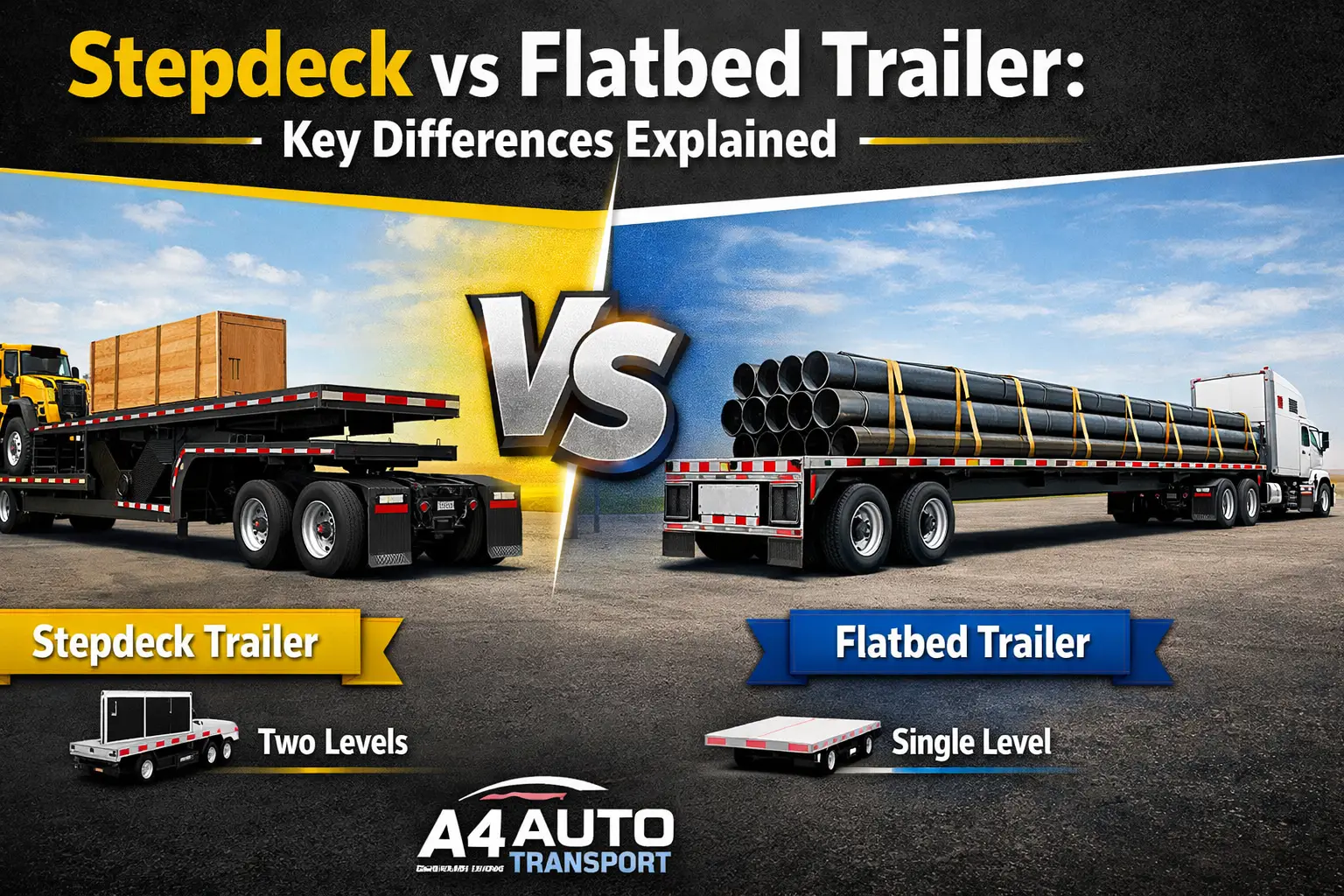
A flatbed trailer rides at 48 to 53 inches off the ground. A step deck drops its lower deck to just 18 to 24 inches, cutting the total cargo height from a flatbed’s 13.5 foot ceiling down to a usable 10 feet. That single difference determines whether your freight moves legally on a flatbed or requires a step deck to stay within federal height limits.
Flatbeds are the default choice for standard freight because they are simpler, cheaper to book, and widely available. But once cargo crosses 8.5 feet in height, a flatbed becomes a permit problem. A step deck solves that by lowering the deck in two levels: an upper deck of 3 to 4 feet near the gooseneck, and a lower main deck that brings tall equipment within legal clearance limits. Construction machinery, agricultural equipment, and industrial freight that would sit dangerously high on a flatbed load cleanly on a step deck without triggering oversize regulations. The choice between the two is not really about preference. It comes down to the height of your cargo and whether you want to pay for permits or avoid them entirely.
Flatbed vs Stepdeck Trailer: What Is the Main Difference?
The main difference between a flatbed and a stepdeck trailer is the deck height. A flatbed has a single level for standard loads, while a stepdeck has a lower deck that allows for taller vehicles or equipment without extra permits.
Take an Overview of Both the Trailers
What Is a Stepdeck Trailer?
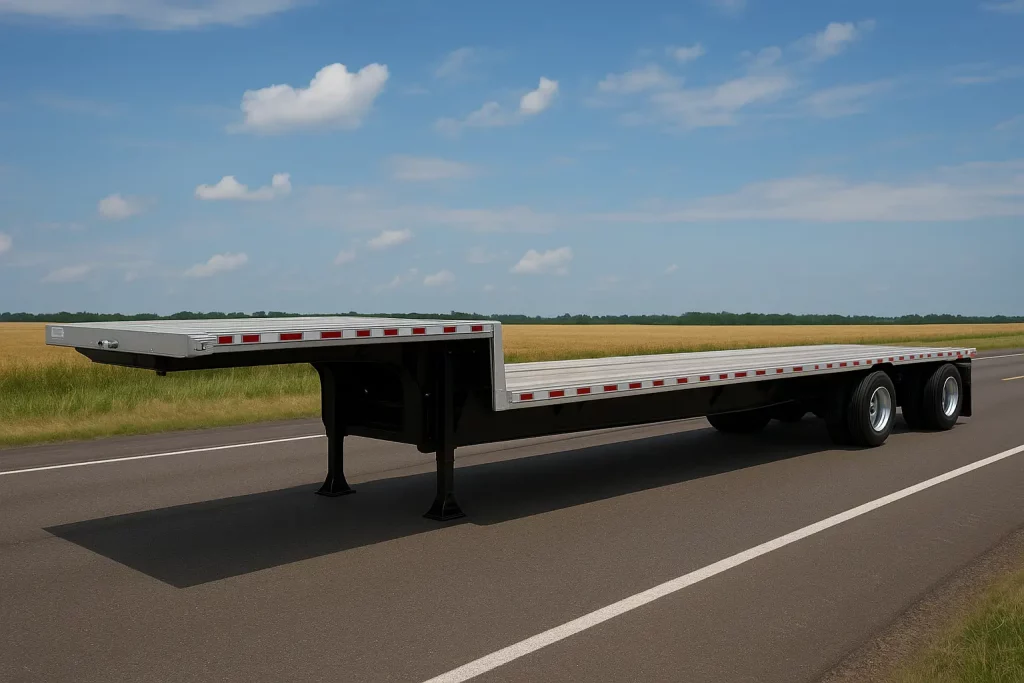
A stepdeck trailer, also known as a drop deck trailer, is designed with two deck levels: a higher front deck (called the upper deck) and a lower rear deck (the main deck). This design allows the trailer to carry taller loads that might exceed the height limits of a standard flatbed. The lower deck offers more clearance under bridges and overpasses, making it ideal for transporting oversized or heavy-duty vehicles.
Because of its lowered deck, loading and unloading on a stepdeck trailer are often easier and safer, especially when ramps are used. We use stepdeck trailers to move vehicles or equipment that require extra height clearance without the need for special permits.
What Is a Flatbed Trailer?
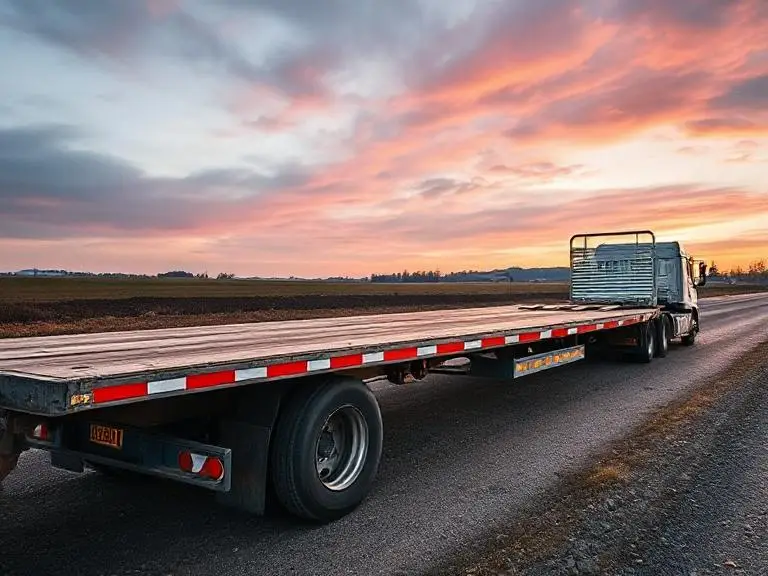
A flatbed trailer is the most common type of open-deck trailer used in the transport industry. It features a single, flat loading surface with no sides or roof, making it extremely versatile for hauling vehicles, building materials, and large freight that can be loaded from any angle.
Flatbed trailers are best suited for loads that do not exceed standard height and width restrictions. They offer flexibility and speed in loading, which is why they’re often used for construction equipment transport and general freight shipping.
Stepdeck Trailer vs Flatbed Trailer: The Dimensions
When comparing a stepdeck vs a flatbed trailer, it’s important to know their physical dimensions. These measurements determine what size and type of cargo each can safely transport. Below is a quick comparison of their average standard dimensions used across the trucking industry.
| Specification | Flatbed Trailer | Stepdeck Trailer |
|---|---|---|
| Length | 48 ft to 53 ft | 48 ft to 53 ft (split into upper and lower decks) |
| Width | 8.5 ft (102 inches) | 8.5 ft (102 inches) |
| Height | Deck height: ~5 ft (60 inches); Maximum freight height: 8 ft 6 in | Upper deck height: ~5 ft; Lower deck height: ~3 ft 6 in; Maximum freight height: up to 10 ft |
| Deck Levels | Single-level deck | Two-level deck (upper and lower) |
Flatbed vs Stepdeck Trailer: The Key Differences
Both flatbed and stepdeck trailers are essential for hauling vehicles, heavy equipment, and oversized freight, but they’re designed for different needs. Knowing how they differ helps you choose the safest and most cost-effective option for your vehicle or cargo transport.
1. Loading and Unloading Ease
Stepdeck Trailer
A stepdeck trailer sits lower to the ground, making it easier to load vehicles or equipment using ramps or forklifts. This setup reduces loading angles, which is especially useful for low-clearance or heavy machinery.
Flatbed Trailer
A flatbed trailer has a higher deck, which can make loading more challenging without cranes or docks. It’s best suited for cargo that can be easily lifted or doesn’t require extra height clearance.
2. Cargo Type and Suitability
Stepdeck Trailer
Built to handle oversized, tall, or uniquely shaped cargo, such as lifted trucks, tractors, or RVs. The lower deck allows extra height clearance without violating road restrictions.
Flatbed Trailer
Ideal for standard-sized vehicles, pallets, and construction materials that fit within legal height and width limits. Perfect for cars and equipment that don’t require special handling or extra clearance.
3. Permit Requirements
Stepdeck Trailer
Because of its lower deck height, a stepdeck trailer often eliminates the need for over-height permits, saving time and administrative costs.
Flatbed Trailer
Flatbed trailers may require special over-height permits if the cargo exceeds legal height limits, which can increase total shipping time and cost.
4. Versatility and Usage
Stepdeck Trailer
Extremely versatile, can carry a wide variety of vehicles, equipment, or mixed freight types. Ideal for shipments that combine different cargo sizes or require easier loading.
Flatbed Trailer
A great all-around option for most standard freight, vehicles, or materials. Commonly used for everyday auto transport, lumber, or palletized cargo.
5. Cost and Efficiency
Stepdeck Trailer
Stepdeck transport is typically 5–15% more expensive than flatbed hauling due to its specialized design, lower deck height, and limited availability. Average rates can range from $2.50–$3.50 per mile, depending on distance and cargo type.
Flatbed Trailer
Flatbed transport is more cost-effective, averaging around $2.00–$3.00 per mile for standard loads. It’s the preferred choice for most vehicle shipments that fit within normal height and weight limits.
Pros and Cons of Stepdeck Trailer
Pros
- Extra Height Clearance: The lower deck allows for taller cargo without exceeding legal height limits.
- Easier Loading: The reduced deck height makes it safer and simpler to load heavy or tall equipment using ramps or forklifts.
- Permit Savings: Often avoids over-height permits, reducing paperwork and costs.
- Versatile Cargo Capacity: Ideal for transporting mixed freight such as machinery, lifted trucks, and oversized vehicles.
Cons
- Higher Transport Cost: Typically 5–15% more expensive than flatbed hauling due to its specialized structure and limited availability.
- Less Availability: Stepdeck trailers are not as common, which can affect scheduling flexibility.
- Complex Load Balancing: Requires careful distribution of weight because of the two-level design.
Pros and Cons of Flatbed Trailer
Pros
- Cost-Effective: Generally cheaper, averaging around $2.00–$3.00 per mile for standard loads.
- Flexible Loading: Can be loaded from any side or from the top, saving time during loading and unloading.
- High Availability: Most common trailer type in the industry, making it easy to find and book.
- Ideal for Standard Freight: Perfect for cars, construction materials, and equipment that fit within height limits.
Cons
- Height Restrictions: Limited to loads under 8 ft 6 in tall; taller freight requires permits.
- Challenging for Oversized Cargo: High deck height can make loading tall or heavy equipment more difficult.
- Less Suitable for Tall Equipment: As compared to step-deck hauling, it is not ideal for machinery or vehicles needing additional height clearance.
Which One is Safer?
Both trailer types are safe when loaded and operated correctly.
A stepdeck trailer offers added safety for tall or heavy cargo due to its lower center of gravity, reducing rollover risk.
A flatbed trailer, on the other hand, provides stable and secure transport for standard-sized loads when properly tied down and distributed.
What Safety Measures Do Trailer Transport Companies Take While Transporting Using These Trailers?
To ensure safe hauling on both trailers, professional carriers typically:
- Perform pre-trip inspections on trailers and secure equipment.
- Use heavy-duty straps, chains, and corner protectors to secure freight.
- Verify height, width, and weight compliance before transport.
- Train drivers in proper loading and unloading techniques.
- Maintain regular equipment checks and comply with FMCSA safety regulations.
Flatbed or Stepdeck Trailer: Which One Should You Choose?
Choosing between a stepdeck and a flatbed trailer depends on your cargo type:
- Use a flatbed trailer for standard vehicles, pallets, or freight within legal height limits; it’s more affordable and widely available.
- Choose a stepdeck trailer for oversized, lifted, or tall vehicles that need extra clearance without permits.
Conclusion
Both stepdeck and flatbed trailers play vital roles in vehicle and freight transport. The choice between them depends on the height, size, and type of cargo being shipped. A flatbed trailer is the go-to option for standard vehicles and general freight, offering affordability and flexibility. Meanwhile, a stepdeck trailer is the smarter pick for taller or heavier loads that need extra clearance and stability.
Frequently Asked Questions
Can a stepdeck trailer carry cars?
What is the maximum load height for a stepdeck trailer?
Do stepdeck trailers require special driving skills?
Can both trailers be used for long-distance transport?
Which trailer is better for hauling construction equipment?
How is freight secured on these trailers?
Are there weight limits for stepdeck and flatbed trailers?
Which trailer is more fuel-efficient?

a4AutoTransport is a group of auto transport researchers and experts that comes in handy for anyone who wants to move their car/vehicle without putting extra miles on the odometer. At a4AutoTransport, We researched over a hundred car shipping companies, interviewed real customers and industry leaders, and collected nearly 500 quotes to find the nation’s best auto transport companies. With our combined 5 years of industry experience and research, we’ll help you find the right car shipper for your budget.