
What is RoRo Shipping? The Complete Guide to Roll-On/Roll-Off Transport
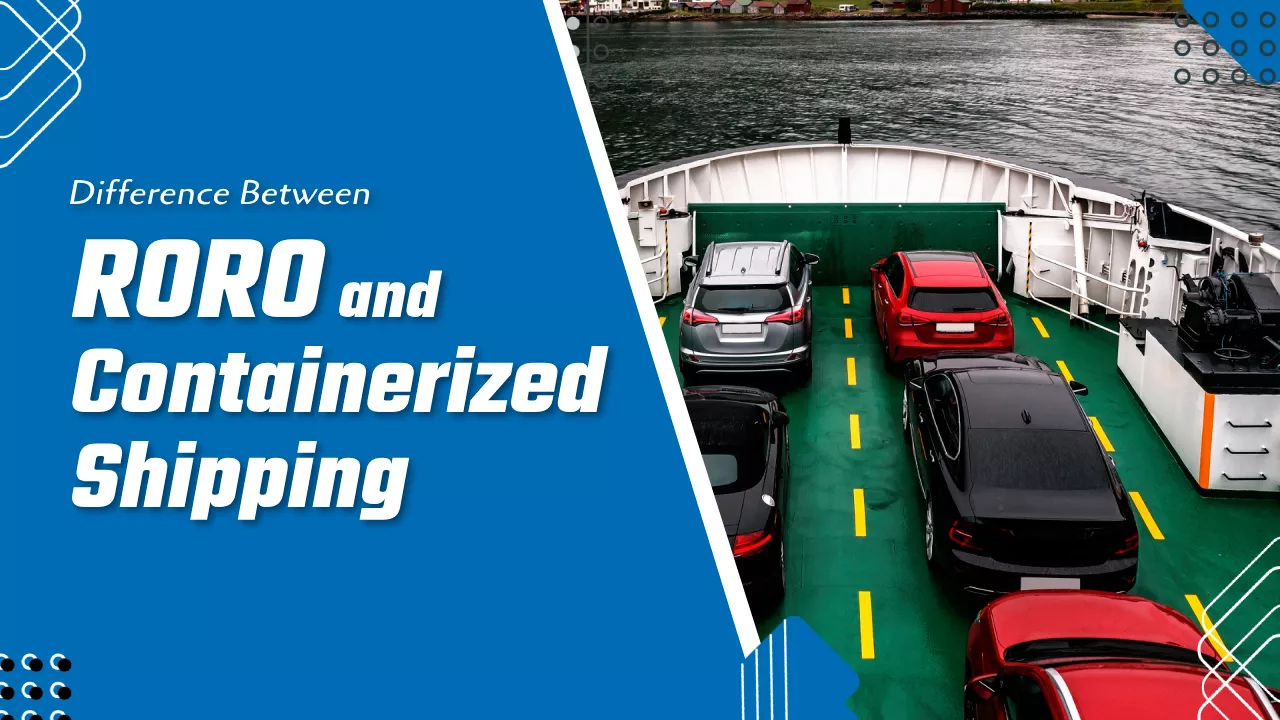
If you need to move a car, truck, piece of heavy equipment, or any wheeled vehicle across an ocean, RoRo shipping is almost certainly the method you will encounter first. RoRo, short for Roll-on/Roll-off, is a form of sea freight where vehicles and wheeled cargo are driven or towed directly onto a purpose-built vessel through a wide stern ramp, transported across open water, and then driven off at the destination port.
It is the dominant method in global vehicle logistics. The automotive industry alone uses RoRo to move millions of new cars every year between continents.
What is RoRo Shipping? A Detailed Explanation

RoRo shipping is a specialized maritime transport method built around a deceptively simple principle: any cargo that has wheels, or that can be placed on wheels, gets driven, towed, or pushed on and off the vessel using ramps rather than cranes. This is in direct contrast to LoLo (Lift-on/Lift-off) shipping, which is the container shipping most people are familiar with, where cranes hoist sealed boxes on and off the ship.
The vessels built for RoRo operations are unlike any other cargo ship. They are purpose-designed floating multi-deck parking structures. A modern RoRo vessel typically has between 12 and 14 decks stacked internally, each connected by retractable ramps that stevedores drive over to position vehicles on the correct level.
How Does RoRo Shipping Work? Step-by-Step Process
Understanding the RoRo shipping process from drop-off to delivery removes a lot of the anxiety people feel about international vehicle transport. Here is exactly what happens at every stage.
Step 1: Vehicle Delivery to the Origin Port Terminal
Your vehicle or equipment is delivered to a designated RoRo terminal at the departure port. These terminals are separate facilities from standard container ports and are specifically designed to process wheeled cargo. At drop-off, port personnel conduct a thorough pre-shipment inspection, documenting the vehicle’s existing condition. This report is transcribed onto the Bill of Lading, which becomes the legal record of the vehicle’s condition at time of loading.
Step 2: Pre-Shipment Inspection and Documentation Review
Before your vehicle is cleared for loading, port staff verify all the documents required to ship a car. Vehicles with incomplete documentation are held at the terminal, which can cause significant delays and storage fees, so having paperwork organized in advance is essential.
Step 3: Professional Loading by Stevedores
Once cleared, qualified port workers called stevedores take control of the vehicle. Stevedores are specially trained drivers with extensive experience handling every type of wheeled cargo from standard sedans to 80-tonne mining excavators.
Step 4: Securing the Cargo with Lashings
Once in position on the deck, each vehicle is secured using a lashing system. This involves wheel chocks, braces, and heavy-duty straps connected to fixed lashing points recessed into the deck. The goal is zero movement during the voyage.
Step 5: Ocean Transit
The vessel departs and follows its scheduled route. Most major RoRo carriers operate on fixed schedules with regular sailing frequencies, similar to a bus timetable for the ocean. Transit times vary significantly by route. Transatlantic crossings from the U.S. East Coast to Western Europe typically take 10 to 16 days. Routes to East Asia from the U.S. West Coast run 14 to 21 days.
Step 6: Unloading and Customs Clearance at Destination
On arrival, stevedores at the destination port reverse the loading process, driving vehicles down the ramp and into the port’s holding yard. Customs clearance then begins.
Step 7: Final Collection or Onward Delivery
Once customs releases the vehicle, it is available for pickup at the port holding yard or can be arranged for onward domestic delivery. For most buyers and shippers, arranging land transport from the destination port to the final location is a separate step.
RoRo Shipping Cost: What You Can Realistically Expect to Pay
RoRo shipping cost is one of the most searched questions about this topic, and it deserves a genuinely useful answer rather than a vague range. The reality is that pricing depends on several variables, but RoRo is reliably cheaper than container shipping for most vehicles and oversized cargo.
Primary Cost Factors
The following variables have the largest impact on what you will pay for a RoRo shipment:
- Origin to destination distance drives the base freight rate. High-traffic routes like U.S. to Europe or Japan to U.S. benefit from competitive pricing because multiple carriers compete for cargo and sailings are frequent.Route distance and frequency:
- RoRo pricing is fundamentally about deck space. A compact car occupies less space than a full-size SUV, which occupies less than a pickup truck with an extended bed. Oversized equipment is priced on a rate-per-lane-meter or per-square-meter basis.Vehicle size and deck space occupied:
- These fluctuate with global oil prices and can add meaningfully to the base freight rate, sometimes 10 to 25 percent. Always request a quote that breaks these out separately.Fuel surcharges:
- Origin and destination ports charge their own handling fees for RoRo terminals. These are not included in the base freight rate and vary by port.Port handling and terminal fees:
- Hiring a customs broker at the destination adds cost but is almost always worth it for first-time shippers. Mistakes in customs documentation create delays that are far more expensive than the broker fee.Customs brokerage:
- RoRo rates are not immune to seasonal demand. Certain routes spike at predictable times of year, particularly in the automotive sector when new model year vehicles are moving.Season and demand:
Approximate Price Ranges by Route
The figures below are indicative ranges based on typical market conditions for a standard passenger car. Actual quotes will vary based on the variables above.
| Route | Approximate RoRo Cost (Standard Car) |
|---|---|
| U.S. East Coast to Western Europe | $900 to $1,800 |
| U.S. East Coast to West Africa | $1,200 to $2,200 |
| U.S. West Coast to Japan / South Korea | $800 to $1,500 |
| U.S. West Coast to Australia / NZ | $1,400 to $2,500 |
| U.S. to Middle East (via Suez) | $1,500 to $2,800 |
| Europe to West Africa | $700 to $1,400 |
| Japan to Australia | $600 to $1,200 |
These are freight costs only and do not include port fees, fuel surcharges, customs brokerage, or destination country import duties and taxes. Always request a fully itemized quote that includes every line item before committing.
How to Get the Best RoRo Rate?
Book early: Scheduling your RoRo shipment several weeks in advance usually results in lower rates because carriers can plan vessel space more efficiently.
Be flexible with sailing dates: Allowing a window of one to two weeks for departure can help you access cheaper shipping slots.
Compare multiple quotes: Request quotes from several RoRo carriers or brokers to identify the most competitive pricing.
Understand the pricing structure: Check what services are included in the quote, such as port fees, documentation, or handling charges.
Research shipping practices: Reviewing reliable guides on obtaining and comparing car shipping quotes can help you ask the right questions and spot hidden costs.
RoRo vs Container Car Shipping: A Detailed Comparison
Roll-on/Roll-off (RoRo) shipping is typically the most affordable option because vehicles are driven directly onto a specialized vessel and secured on internal decks. This method works best for operational vehicles and standard shipments. In contrast, Container shipping for vehicles places the car inside a sealed container, offering greater protection from weather, theft, and damage.
RoRo vs Container Shipping Comparison
| Feature | RoRo Shipping | Container Shipping |
|---|---|---|
| Cost | Usually cheaper due to shared vessel space | More expensive because of container rental |
| Vehicle Condition | Vehicle must be operational to drive onto ship | Can ship non-running vehicles |
| Protection Level | Exposed to sea air and port handling | Fully enclosed and protected |
| Personal Items | Typically not allowed inside vehicle | Sometimes allowed depending on rules |
| Loading Method | Vehicle is driven onto the ship deck | Vehicle is loaded and secured inside a container |
| Best For | Standard cars and budget-friendly shipping | Luxury, classic, or high-value vehicles |
| Transit Availability | More frequent sailings on major routes | May depend on container availability |
Advantages of RoRo Shipping
Lower Cost Per Vehicle
Because RoRo vessels are purpose-built for high-volume vehicle transport and the loading process is highly efficient, the cost per unit is typically lower than container shipping for the same cargo.
Faster Port Operations
RoRo vessels load and unload significantly faster than container ships. At a well-run RoRo terminal, stevedores process vehicles continuously around the clock. A vessel handling several thousand vehicles can turn around in port in 24 to 48 hours.
Dramatically Reduced Damage Risk
Less handling means less damage. Container shipping subjects vehicles to crane lifts at both ends of the voyage, which introduces cable tension, weather variables, and rigging risk. RoRo eliminates all of that. The vehicle is driven onto the ship and driven off.
Handles Oversized Cargo Without Modification
Construction excavators, combine harvesters, mining trucks, and other oversized equipment would require complete disassembly to fit inside a container.
Weather-Independent Loading
RoRo loading via the stern ramp is largely unaffected by weather conditions that would halt crane-based container operations. Strong winds that ground cranes at a container terminal do not stop vehicles from being driven up a ramp.
Consistent Schedules and High Frequency
Major RoRo carriers operate fixed schedules on key trade routes, with sailings as frequent as weekly or twice weekly on busy lanes. This schedule reliability is important for manufacturers and dealers who need to plan vehicle delivery windows months in advance.
RoRo Shipping Limitations and Considerations
No Personal Belongings
The single most common source of frustration for first-time RoRo shippers is the strict prohibition on personal items inside the vehicle. If you are planning an international relocation and want to ship household goods at the same time as your vehicle, RoRo is not the right method for the vehicle portion.
Limited Port Availability
Not every port in the world has a RoRo terminal. Container shipping infrastructure is far more widespread globally. If your destination is a smaller coastal city, an island nation with limited port infrastructure, or a landlocked country that relies on a single nearby port, RoRo may not be an option on that specific route.
Vehicle Must Generally Be Operational
While non-running vehicles can sometimes be accommodated on rolltrailers, this adds complexity, cost, and lead time. Standard RoRo processing assumes the vehicle drives on and off under its own power. If your vehicle is a project car, a recent purchase that needs repair, or has been stored, confirm operability well before your shipping date.
Individual Security is Lower Than Container Shipping
In container shipping, your vehicle is sealed inside a steel box that is locked and tracked. In RoRo, it sits on an open deck inside the vessel’s hull alongside potentially thousands of other vehicles.
Exposure Within the Vessel
Vehicles on RoRo decks are inside the ship and protected from the open ocean, but they are not individually enclosed. Over a long voyage, diesel fumes, dust, and occasional condensation can accumulate on vehicle surfaces.
What Are Global RoRo Shipping Routes and Major Ports?
RoRo shipping operates on a global network of fixed trade routes connecting major automotive and industrial markets. Understanding which routes are served and which ports are equipped for RoRo operations helps in planning realistic shipping timelines and budgets.
Major U.S. RoRo Export and Import Ports
The United States has several key ports that handle significant RoRo volumes:
- Port of Baltimore (Maryland): One of the largest auto handling ports in the U.S., processing millions of vehicles per year on both import and export. Direct RoRo connections to Europe, Asia, and the Middle East.
- Port of Brunswick (Georgia): A major RoRo hub for Southeast U.S. auto imports, primarily receiving vehicles from Asian manufacturers.• Port of Jacksonville (Florida): Handles substantial RoRo volume for both import and export, with strong connections to Europe and Latin America.
- Port of Los Angeles / Long Beach (California): The primary West Coast gateway for RoRo traffic to and from Asia.
- Port of Newark / Bayonne (New Jersey): The dominant Northeast port for automotive RoRo, receiving the majority of European vehicles entering the U.S. market.
Major International RoRo Corridors
The busiest RoRo trade lanes in the world reflect where vehicles are manufactured versus where they are consumed:
- Japan and South Korea to the Americas and Europe: The Asia-to-West automotive trade is one of the highest-volume RoRo lanes globally.
- Europe (particularly Germany) to the U.S. and Middle East: Premium European vehicles flow east and west via major RoRo carriers.
- U.S. to West Africa: Used vehicles from North America to markets in Nigeria, Ghana, and neighboring countries represent a major RoRo flow.
- Intra-European RoRo: Short-sea RoRo services move vehicles between European ports on smaller dedicated vessels.
Who Uses RoRo Shipping?
RoRo shipping supports a far broader range of users than its association with bulk automotive trade suggests.
Automotive Manufacturers and Distributors
The single largest user segment. Every major car brand that manufactures and sells globally uses RoRo as the primary distribution method for moving production vehicles from factory to market. The method’s speed, cost efficiency, and scale are unmatched for this purpose.
Vehicle Dealers and International Importers
Dealers buying inventory from international sources, whether at overseas auctions or directly from foreign distributors, ship stock via RoRo. If you have ever purchased a vehicle from an international online auction or marketplace, the shipping almost certainly involved a RoRo leg.
The used car import trade is driven in large part by buyers using online car auction sites to source vehicles from Japan, the U.S., and Europe. Most of those vehicles travel to their new markets via RoRo.
Private Individuals Relocating Internationally
People moving abroad for work, retirement, or family reasons frequently ship their personal vehicles. RoRo is the most cost-effective option for most standard vehicles, and it is a straightforward process once you understand the documentation requirements.
Construction and Infrastructure Companies
Project contractors shipping heavy equipment to job sites in other countries rely almost entirely on RoRo. Moving a fleet of excavators, graders, and loaders to a construction project in West Africa or the Middle East is a standard RoRo operation.
Final Thoughts
RoRo shipping has been the backbone of global vehicle logistics for decades, and for good reason. It is reliable, efficient, cost-effective, and has a genuinely strong safety record for the type of cargo it handles. Whether you are an automaker moving ten thousand vehicles per month, a dealer importing stock from an overseas market, or a private individual shipping your car to a new home on the other side of the world, RoRo is worth understanding thoroughly before you book.
Frequently Asked Questions About RoRo Shipping
Is RoRo shipping safe for my vehicle?
Can I ship a non-running vehicle via RoRo?
How long does RoRo shipping take?
Can I put my belongings inside the vehicle?
What is the difference between RoRo and LoLo shipping?
How much fuel should be in the tank?
Do I need a freight forwarder for RoRo shipping?
What happens if my vehicle is damaged during RoRo shipping?

a4AutoTransport is a group of auto transport researchers and experts that comes in handy for anyone who wants to move their car/vehicle without putting extra miles on the odometer. At a4AutoTransport, We researched over a hundred car shipping companies, interviewed real customers and industry leaders, and collected nearly 500 quotes to find the nation’s best auto transport companies. With our combined 5 years of industry experience and research, we’ll help you find the right car shipper for your budget.