
How to Transport a Golf Cart Without Damage (2026 Detailed Guide)
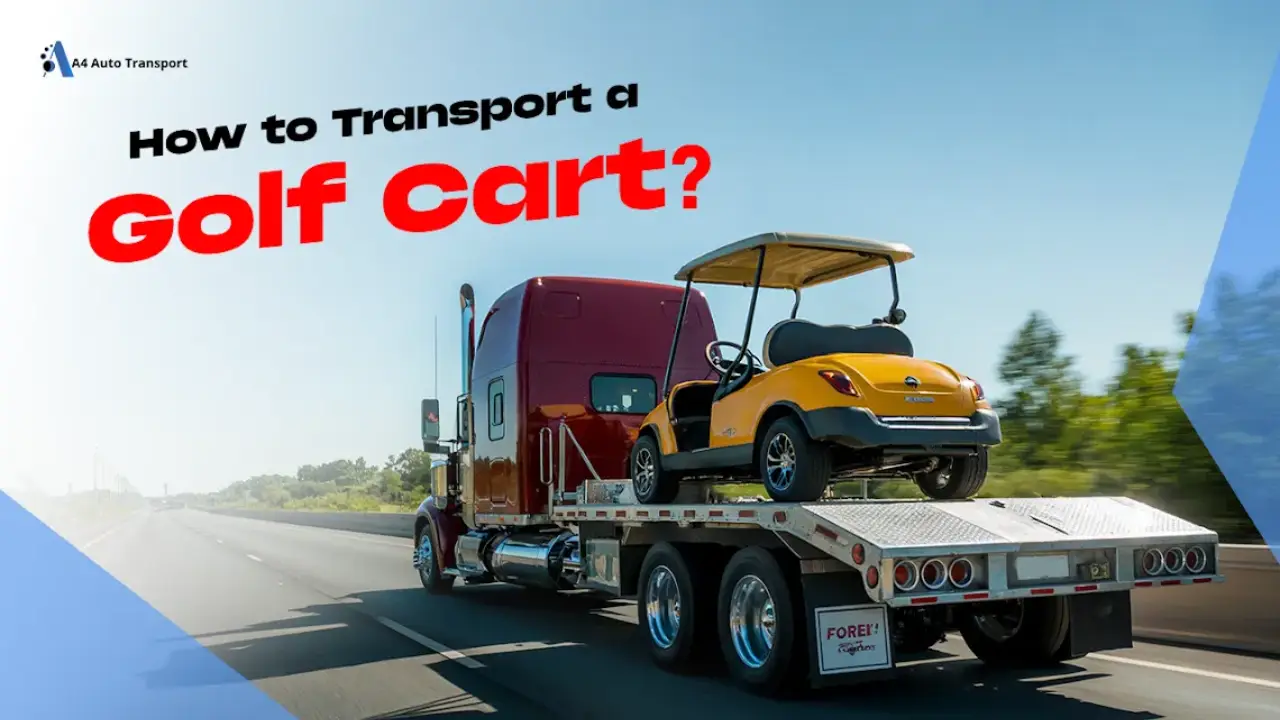
Golf carts may look compact and easy to move, but transporting one the wrong way can quickly lead to damage, delays, or even road hazards. The good news is that moving a golf cart safely is straightforward when you follow the right approach. In general, the steps involve selecting the proper trailer or truck bed, loading the cart at a safe ramp angle, securing it with heavy-duty straps and wheel chocks, and double-checking stability before hitting the road.
Whether you’re hauling a standard 2-passenger cart to a nearby course, moving a lifted 6-seater to a vacation property, or arranging long-distance transport, understanding the basics makes the process much safer and easier.
Key Highlights:
- Measure the golf cart’s length, width, and height first to ensure it fits properly in a pickup truck bed or trailer..
- Choose the most suitable transport method based on distance and cart size, such as a pickup truck for short trips, a utility trailer for larger carts, or professional shipping for long-distance moves.
- Load the cart carefully using properly rated ramps and secure it with four ratchet straps attached to the frame along with wheel chocks to prevent shifting or rolling.
- Follow basic towing safety practices like driving at controlled speeds, allowing extra braking distance, and rechecking straps and chocks during the trip.
Step 1: Measure Your Golf Cart Before You Do Anything Else

A standard 2-passenger golf cart measures roughly 92 inches long, 48 inches wide, and 75 inches tall. But the moment you add a lift kit, a rear seat kit, an extended roof, or oversized tires, those numbers change significantly. A lifted cart with a 6-inch lift kit can easily push past 80 inches in height.
Before you even think about trailers or trucks, grab a tape measure and record these three numbers:
- Length: Front bumper to the rearmost point (including any rear accessories)
- Width: Tire edge to tire edge, at the widest point
- Height: Ground to the tallest point, whether that is the roof, antenna, or any installed accessories
These measurements will determine whether a pickup truck bed is even an option, what trailer size you need, and whether you will clear any low bridges or parking structures along your route.
Pro Tip: If your cart has a fold-down windshield or a removable roof, folding or removing it before transport can shave several inches off the height and make loading much easier.
Step 2: Choose the Right Transport Method
There are three main ways to transport a golf cart: a pickup truck bed, an open utility trailer, or a professional auto transport service. Each has its place depending on distance, cart size, and budget.
Option A: Pickup Truck Bed
A pickup truck is the quickest and most accessible option for short-distance transport. A full-size truck with a 6.5-foot (78-inch) or 8-foot (96-inch) bed can usually fit a standard 2-passenger golf cart. Many of the fastest pickup trucks on the market also come with strong payload capacities and large beds, which makes them practical for hauling equipment like golf carts in addition to delivering performance.
Before loading, confirm two things:
- Payload capacity: Most golf carts weigh between 800 and 1,200 pounds. Check your truck’s owner’s manual for the payload limit.
- Bed width: Standard truck beds are 50 to 60 inches wide. Your cart’s tire-to-tire measurement needs to fit comfortably with room for straps.
One thing competitors often miss here: if the cart is longer than the truck bed, you can leave the tailgate down, but you must use a red flag or light on the overhang and secure the tailgate itself so it does not drop further under weight.
Option B: Open Utility Trailer
For 4-passenger or 6-passenger carts, lifted carts, or longer trips, a utility trailer is a far better choice.
| Trailer Size | Best For | Notes |
|---|---|---|
| 5 x 8 ft | 2-passenger standard carts | Tight fit; check width carefully |
| 6 x 10 ft | 4-passenger or lifted carts | Most popular all-around size |
| 7 x 12 ft | 6-passenger or heavy custom carts | Best for modified or oversized carts |
| Enclosed trailer | Long distance or luxury/collector carts | Maximum protection from elements |
Make sure your towing vehicle has a compatible hitch receiver and enough towing capacity for the combined weight of the trailer and the cart.
Option C: Professional Auto Transport Service
For long-distance moves, cross-country relocations, or when you simply do not want the hassle of renting a trailer and doing it yourself, choosing from top auto transport companies is a smart move. Many auto transport carriers handle golf carts, ATVs, and other non-standard vehicles alongside regular cars.
Step 3: Get the Right Loading Ramps
This is where people get into trouble. Not all ramps are created equal, and using the wrong ones is how you end up with a cart sliding off mid-load or a ramp collapsing under the weight.
Here is what to look for in a good set of loading ramps:
Weight Rating
Your ramps need a combined weight capacity that exceeds the cart’s weight plus the person guiding it. A 1,200-pound cart means you should be using ramps rated for at least 1,500 to 2,000 pounds combined. Never use ramps at their absolute maximum rating.
Ramp Length and Angle
This matters more than most guides acknowledge. A shorter ramp creates a steeper angle, which increases the risk of the cart’s undercarriage scraping the edge of the truck bed or trailer deck.
The general rule of thumb is a 3:1 rise-to-run ratio at most. Meaning for every 1 foot of height between the ground and the deck, you want at least 3 feet of ramp length. A trailer deck that sits 24 inches off the ground should ideally use ramps that are at least 6 feet long.
If you own a lifted cart, go longer, not shorter. An 8-foot or 10-foot ramp on a taller trailer makes a real difference.
Surface Grip
Aluminum ramps with ribbed or serrated surfaces provide much better traction than smooth steel. If you are loading in wet conditions, rubber-coated or rubber-backed ramps are worth the extra cost.
Always set ramps on level, firm ground and hook them securely to the trailer lip or truck bed edge before driving the cart up. Ramps that shift mid-load are a leading cause of transport accidents.
Step 4: Load the Golf Cart the Right Way

Loading seems simple, but the positioning and approach angle matter a lot. Here is the right way to do it:
- Park the truck or trailer on flat, level ground. Any slope adds instability and increases the chance of ramp slippage.
- Deploy and secure the ramps before the cart is anywhere near them. Hook them firmly to the trailer or truck bed edge.
- Remove any accessories that could snag on the ramp edges or the trailer deck, such as rear-facing lights, step bars, or tow hitches mounted to the cart.
- Drive slowly up the ramps. Keep the cart straight and centered. Never approach at an angle because the cart can tip or cause one ramp to shift.
- Position the cart close to the front of the truck bed or trailer. This places weight over the rear axle of the tow vehicle and improves stability on the road. In a trailer, centering the cart front-to-back helps prevent trailer sway.
- Engage the parking brake immediately once the cart is in position.
Electric vs Gas Cart: One Important Difference
If you are transporting an electric golf cart, set it to tow mode or maintenance mode if available. This disengages the motor from the drivetrain and prevents the motor from resisting wheel movement, which can damage the motor controller during transport. Check your owner’s manual if you are unsure whether your model has this mode.
Step 5: How to Tie Down a Golf Cart on a Trailer (The Right Way)
Knowing how to tie down a golf cart on a trailer correctly is the single most important safety step in this whole process. A cart that is improperly strapped can shift, tip, or even fall off the trailer during sudden braking or sharp turns.
What You Need
- At least four ratchet straps rated for 1,500 lbs or more each (not regular bungee cords)
- Four wheel chocks, two in front and two behind the rear tires
- Optional: soft loop tie-down straps to protect the cart frame from strap bite
Where to Attach the Straps
This is the detail most people get wrong. Do not loop straps over the roof, around the steering wheel, or through the seat frame. Those points are not structural and will not hold under load.
Attach straps to the lower frame rails of the cart, as close to the wheel wells as possible. These are the strongest points on the cart’s structure. Many carts also have purpose-built tie-down loops or hooks near the front and rear bumpers.
Use one strap on each of the four corners, running diagonally from the cart frame down to the trailer’s D-ring anchor points. The straps should form an X pattern when viewed from above.
How Tight Is Tight Enough
Straps should be snug and taut, not cranked to maximum tension. Over-tightening can warp the cart frame, crack plastic body panels, or damage the suspension. A good test: try rocking the cart by hand. If it barely moves, the strapping is right.
Wheel Chocks
Place wheel chocks both in front of and behind the rear tires. Front tires can be blocked too for extra security. Chocks are cheap and they provide a critical backup if a strap loosens during the trip.
Quick check before you pull out: walk around the cart and tug each strap once more. Then recheck after the first 10 to 15 miles of the trip. Straps can loosen slightly as the load settles.
Step 6: Road Safety Rules You Cannot Skip
Getting the cart loaded and secured is the hard part. But there are a few road safety basics that apply any time you are towing a trailer or hauling a load.
Speed
Keep speeds at or below 55 mph on highways when towing a trailer with a golf cart. Higher speeds amplify trailer sway and reduce your ability to brake quickly. On surface roads, stay below 45 mph.
Braking Distance
A loaded trailer adds significant weight behind your vehicle. Your braking distance increases considerably. Leave extra following distance and begin braking earlier than you normally would.
Turns and Corners
Take turns wide and slow. A trailer swings outward during turns, and its rear wheels follow a tighter arc than the tow vehicle. Clipping a curb with a trailer can dislodge the load or damage the trailer.
Lighting and Visibility
If your trailer has brake lights and turn signals, make sure they are working before every trip. If your cart overhangs the trailer or truck bed by more than 4 feet, you are legally required in most states to use a red flag or amber light on the rear of the overhang.
Check Straps Mid-Trip
For trips longer than an hour, stop once to check the straps and wheel chocks. Vibration and road bumps can work straps loose over time, even on a well-secured load.
Transporting a Golf Cart Long Distance: What Changes
Short local hauls are fairly forgiving. Long-distance transport, whether a few hundred miles or across the country, requires a bit more planning.
Fuel or Battery Prep
For gas-powered carts going on a long haul, run the fuel level down before loading if the transport will involve significant temperature changes or altitude gain. A full tank can create vapor pressure issues in hot weather.
For electric carts, charge the battery to around 50 to 80 percent before transport, not 100 percent. A fully charged lithium battery can degrade faster when stored or transported in hot conditions at full charge.
Disconnecting the Battery
For any trip over a day or two, disconnect the golf cart battery to prevent parasitic drain. If the cart will be stored at the destination before use, a trickle charger is a good investment to maintain battery health.
Weather Considerations
If you are transporting in rain, snow, or extreme heat, consider whether an enclosed trailer is worth the extra cost. Rain and road salt can corrode electrical connections and metal components faster than most people expect.
Professional Shipping for Long Distance
If the distance makes DIY transport impractical, professional carriers handle golf carts more often than you might think. If you want to understand what that process looks like end-to-end, our breakdown of how to ship a car covers the full workflow from quote to delivery, and most of it applies directly to golf carts as well.
Tying Down a Golf Cart on a Trailer: Common Mistakes to Avoid
Since tying down a golf cart on a trailer is where most transport problems actually originate, it is worth calling out the most common mistakes specifically:
- Using only two straps instead of four. Two straps are not enough. A cart can still rock side to side or tip forward under sudden braking with only front or rear straps.
- Strapping to the roof frame. Golf cart roofs are not structural. They are designed to provide shade, not to anchor a 1,000-pound load. The roof can crack or deform under strap tension.
- Skipping wheel chocks. Straps prevent tipping; chocks prevent rolling. You need both.
- Not using soft loops. Metal ratchet hook hardware directly on painted or powder-coated frame rails will scratch and eventually cut into the finish. Soft loops protect the contact points.
- Overtightening straps. More tension is not always better. Enough tension to prevent movement is the goal. Maximum ratchet tension can warp thin frame sections on lighter carts.
- Not rechecking after the first few miles. Loads settle. A strap that felt tight in the driveway may have an inch of slack after 10 miles on a rough road.
How to Ship a Golf Cart with a Professional Carrier
If you decide that DIY transport is not the right call, working with a professional carrier is straightforward. Here is what the process generally looks like:
- Get multiple quotes. Prices vary significantly between carriers. Use a broker or comparison tool to get at least three quotes before committing.
- Confirm the carrier handles non-standard vehicles. Not every auto transport carrier accepts golf carts. Ask specifically before booking.
- Document the cart’s condition before pickup. Take photos of every panel, the roof, the tires, and the undercarriage. This protects you if there is a damage claim at delivery.
- Understand the insurance coverage. Carrier insurance typically covers damage that occurs in transit, but there are limits and exclusions. Ask about the per-vehicle coverage amount.
- Inspect on delivery before signing the bill of lading. Never sign the delivery paperwork without walking around the cart and comparing its condition to your pre-transport photos. Signing accepts the delivery as-is.
Final Thoughts
Transporting a golf cart is not complicated when you follow the right steps. Measure before you commit to a transport method, use the correct ramp for the angle involved, strap all four corners to solid frame points, and drive conservatively once on the road.
For short trips, a pickup truck or utility trailer gets the job done. For long-distance moves, a professional carrier makes more sense, especially for valuable or customized carts. Either way, the prep work you do before the cart moves is what determines whether it arrives in the same condition it left in.
Frequently Asked Questions
Can you transport a golf cart in a pickup truck?
How do you transport a golf cart without a trailer?
How many straps do you need to tie down a golf cart?
Do I need special permits to transport a golf cart on public roads?
Is it safe to transport an electric golf cart on its side?

a4AutoTransport is a group of auto transport researchers and experts that comes in handy for anyone who wants to move their car/vehicle without putting extra miles on the odometer. At a4AutoTransport, We researched over a hundred car shipping companies, interviewed real customers and industry leaders, and collected nearly 500 quotes to find the nation’s best auto transport companies. With our combined 5 years of industry experience and research, we’ll help you find the right car shipper for your budget.